
The Living Blueprint: How to Build a Perfect Community Aquarium That Actually Thrives
A successful community aquarium is not created by simply filling a tank with water, adding fish, and hoping for the best. It is built through careful planning, biological understanding, and long-term thinking. What you are really creating is a miniature ecosystem, one where every element visible or invisible plays a role in maintaining balance.
The blueprint visually reinforces this idea: plants, filtration, substrate, and fish are all interconnected parts of a single system. When one element is ignored, the entire system becomes unstable. When everything is aligned, the aquarium begins to sustain itself with minimal intervention.
Understanding What Makes a Community Aquarium Work
A “community aquarium” is often misunderstood as simply a mix of different fish species. In reality, it is much more structured than that. The diagram on page 2 highlights an important concept: success happens only when three conditions overlap: behavioural compatibility, shared environmental needs, and spatial balance within the tank.
Fish that are peaceful by nature may still fail to coexist if their environmental requirements differ. Similarly, fish that thrive in the same water conditions can still create chaos if they occupy the same physical space or exhibit territorial behaviour. The key lies in aligning all these variables so that no species disrupts another.
Over time, this alignment creates a tank where fish display natural behaviour instead of stress responses, which is ultimately the clearest sign of a healthy system.
The Role of Substrate: More Than Just Decoration

Substrate is often treated as a visual choice, but it is actually one of the most influential components of an aquarium. As explained on page 3 of your blueprint, substrate determines not only how plants grow but also how water chemistry behaves over time.
A nutrient-rich substrate actively participates in the ecosystem by releasing minerals that support plant growth. This makes it ideal for aquascaped tanks where plants are expected to thrive and contribute to biological balance. On the other hand, inert substrates remain chemically stable, making them a safer and more predictable option for beginners or low-maintenance setups.
The key is not choosing what looks best, but what supports the kind of ecosystem you are trying to build. If the goal is a lush planted tank, investing in a high-quality aqua soil becomes essential.
You can explore suitable options here:
👉 https://aquariumproductsindia.in/products/indica-soil-3liters

Water Chemistry: Why Stability Always Wins

One of the most important insights from the blueprint (page 4) is that fish are surprisingly adaptable to a range of water conditions, but they are extremely sensitive to sudden changes. This shifts the focus from chasing perfect numbers to maintaining consistency.
Temperature, pH, alkalinity, and hardness all interact in complex ways, but what truly matters is that they remain stable over time. A tank with slightly imperfect but stable parameters will always outperform a tank where conditions fluctuate frequently.
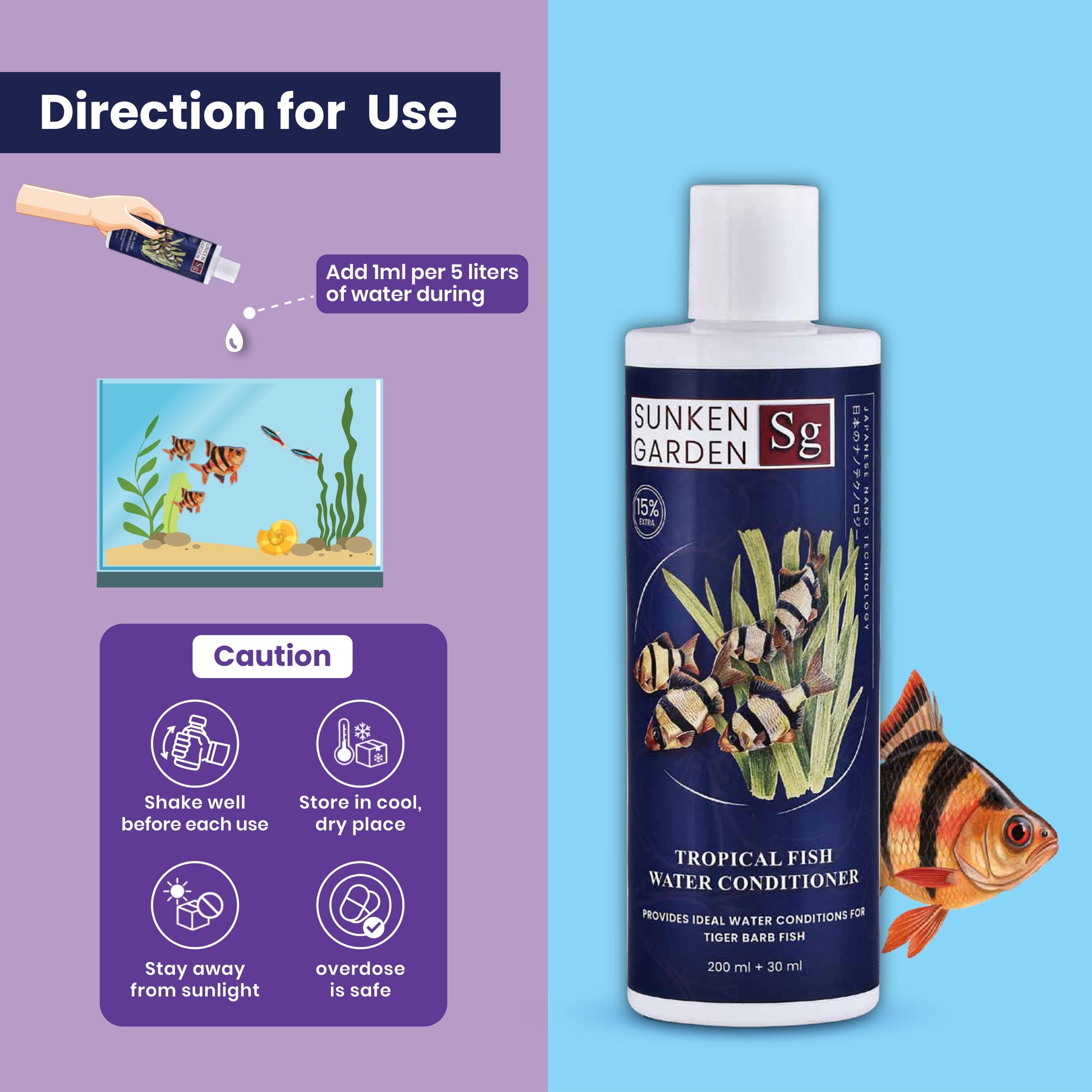
A critical factor often overlooked by beginners is the presence of chlorine and chloramine in tap water. These chemicals are harmless to humans but extremely toxic to fish and beneficial bacteria. Neutralising them is not optional; it is foundational.
To ensure safety, always use a reliable water conditioner:
👉 https://aquariumproductsindia.in/products/sunken-garden-barb-water-conditioner
The Nitrogen Cycle: The Invisible Backbone of Your Aquarium

Beneath the surface of your aquarium, a continuous biological process is taking place. The nitrogen cycle, illustrated on page 5, is what transforms toxic waste into manageable compounds.
Fish constantly produce waste, which breaks down into ammonia, a substance that is highly toxic even in small amounts. Beneficial bacteria then convert this ammonia into nitrite, which is still harmful, and finally into nitrate, which is comparatively safer and can be absorbed by plants.
Without this cycle, an aquarium cannot sustain life. It is not an optional feature; it is the core mechanism that makes everything else possible.
To establish this system efficiently, many aquarists use bacterial starters:
👉https://aquariumproductsindia.in/products/life-aayu-bacter-boost-plus-natural-aquarium-bacteria-starter-for-clear-water-ammonia-control-eco-balance-100-shrimp-safe-starter-kit?_pos=1&_p
The Reality of New Tank Syndrome

One of the most critical phases in aquarium setup is the initial cycling period. The graph shown on page 6 explains why so many beginners lose fish within the first few weeks. As the tank matures, ammonia and nitrite levels spike before stabilising, creating a temporary but dangerous environment.
This phase cannot be rushed. It typically takes four to six weeks for the bacterial population to grow enough to handle waste effectively. Adding fish too early exposes them to toxic conditions that are often invisible but deadly.
Understanding this timeline is essential because patience during this stage determines long-term success.
Fishless Cycling: Building Stability Before Life
Instead of exposing fish to unstable conditions, experienced aquarists prefer fishless cycling. This method allows the nitrogen cycle to develop fully before introducing any livestock.
This can be done by adding controlled ammonia sources and monitoring how the system processes them. Over time, the tank develops the bacterial capacity needed to support life safely.
Testing becomes an important part of this process, as it provides real-time insight into what is happening inside the water.
A reliable test kit is indispensable:
👉 https://aquariumproductsindia.in/products/water-test-kit

🐟 Fish Compatibility: The Rule That Defines Everything

No matter how advanced your setup is, the wrong combination of fish can destabilise the entire aquarium. The compatibility guide on page 9 simplifies this into a rule that is both intuitive and absolute: if one fish can fit another into its mouth, it eventually will.
This is not just about aggression; it is about instinct. Even seemingly peaceful fish can display predatory behaviour under the right conditions. Choosing species that coexist naturally is one of the most important decisions you will make.
Behaviour and Movement: Creating a Natural Social Structure

Fish are not just biological entities; they are social organisms with specific behavioural patterns. The distinction between shoaling and schooling, explained on page 10, influences how fish interact with their environment and each other.
Shoaling fish prefer loose groupings and feel secure when surrounded by others of their kind. Schooling fish, on the other hand, move in tightly coordinated formations and require more space to exhibit this behavior.
Keeping fish in appropriate group sizes allows them to behave naturally, reducing stress and enhancing the overall visual harmony of the tank.
Designing the Tank: Using Every Layer Effectively

A well-designed aquarium makes use of vertical space rather than crowding a single area. The structure shown here divides the tank into functional layers: surface, midwater, and bottom.
When fish are distributed across these layers, competition is reduced, and movement becomes more fluid. This creates a sense of balance that is both ecological and aesthetic.
The Closed-Loop Ecosystem: Where Everything Connects

By the time all elements are in place, the aquarium begins to function as a closed-loop system, as illustrated . Waste produced by fish becomes nutrients for plants, plants help stabilise water quality, and filtration systems support bacterial colonies that keep toxins in check.
At this stage, the aquarium no longer feels artificial. It begins to behave like a small, self-regulating ecosystem.
🛒 Build Your Aquarium the Right Way
Creating a thriving aquarium is a gradual process, but having the right tools makes a significant difference. Whether you are starting from scratch or refining an existing setup, you can find everything you need here:
👉 https://aquariumproductsindia.
Frequently Asked Questions (FAQs)
1. How long should I cycle a new aquarium before adding fish?
A new aquarium should be cycled for at least 4–6 weeks. This allows beneficial bacteria to establish and safely convert toxic ammonia into nitrate. Adding fish too early can lead to ammonia poisoning and fish loss.
2. What is the easiest fish for a community aquarium for beginners?
Beginner-friendly community fish include guppies, neon tetras, zebra danios, mollies, and platies. These species are hardy, peaceful, and adapt well to a range of water conditions.
3. How many fish can I keep in my aquarium?
A common rule is 1 inch of fish per gallon of water, but this depends on filtration, tank size, and species behavior. Overstocking leads to poor water quality and stress.
4. What is the ideal temperature for a freshwater community tank?
Most tropical community aquariums thrive between 22°C to 26°C (72°F to 78°F). Stability is more important than hitting an exact number.
5. How often should I change water in my aquarium?
You should perform a 20–25% water change every week. This helps remove excess nitrates and keeps the environment stable for fish and plants.
6. Do I need a filter for a community aquarium?
Yes, a filter is essential. It provides mechanical, chemical, and biological filtration, helping maintain clean water and supporting beneficial bacteria.
7. What causes cloudy water in a new aquarium?
Cloudy water is usually caused by a bacterial bloom during the cycling phase. It is normal and typically clears on its own as the nitrogen cycle stabilizes.
8. Can I keep different fish species together?
Yes, but only if they have similar water requirements and compatible temperaments. Avoid mixing aggressive and peaceful species.
9. What is “New Tank Syndrome”?
New Tank Syndrome occurs when a tank lacks sufficient beneficial bacteria, leading to toxic ammonia and nitrite spikes. It is the most common cause of fish death in new setups.
10. Do aquarium plants help maintain water quality?
Yes, live plants absorb nitrates and toxins, improve oxygen levels, and contribute to a more stable and natural ecosystem.
11. How do I know if my aquarium is fully cycled?
Your tank is cycled when ammonia and nitrite levels are zero, and nitrate is present. This can be confirmed using a water test kit.
12. Is tap water safe for aquariums?
Tap water contains chlorine and chloramine, which are harmful to fish. Always use a water conditioner before adding it to your tank.

