

There's something deeply satisfying about looking into an aquarium and seeing a miniature underwater world come to life. Lush green carpets, vibrant stem plants swaying gently in the current, and healthy fish gliding through crystal-clear water. This is the dream that draws so many of us into the planted tank hobby.
Over the past few years, Indian aquarium enthusiasts have increasingly moved away from the artificial decorations and coloured gravel of the past. Instead, they're embracing natural planted aquascapes inspired by real underwater ecosystems, riverbanks, forest streams, and tropical wetlands. This shift isn't just about aesthetics; it's about creating living environments where plants and fish thrive together in balance.
But here's something many beginners discover the hard way: no matter how expensive your lights or how carefully you dose fertilisers, your planted tank will struggle if the foundation isn't right. And that foundation? It's the substrate beneath everything, the aquarium soil.
In this guide, we'll explore why aquarium soil is the single most important investment you can make for a planted tank, how it works, and how to use it correctly. We'll also introduce you to Indica Soil, a premium planted aquarium soil made right here in India, designed specifically for Indian water conditions and hobbyists.
The Foundation of Every Thriving Planted Tank
Think of your aquarium substrate the way you'd think about soil in a garden. You wouldn't expect tomatoes to flourish in a pot filled with decorative pebbles, would you? The same principle applies underwater. Aquatic plants need a substrate that anchors their roots, provides essential nutrients, and creates the right chemical environment for healthy growth.
Ordinary gravel or sand might look acceptable, but they're essentially inert; they don't release nutrients, they don't support root development properly, and they don't contribute to the biological processes that keep your tank stable. This is where specialised aquarium soil changes everything.
Quality aquarium soil is formulated from natural materials, typically volcanic earth or fertile river basin soils, processed to create a porous, nutrient-rich substrate. When you fill your tank with water, this soil begins working immediately: releasing nutrients to plant roots, buffering water chemistry to optimal levels, and providing surface area for beneficial bacteria to colonise.
Why Aquarium Soil Matters: The Science Made Simple
Nutrient Delivery Directly to Roots
Most aquatic plants are root feeders. While they can absorb some nutrients through their leaves, robust growth depends on a steady supply of iron, potassium, and trace elements delivered directly to the root zone. Premium aquarium soil comes pre-loaded with these nutrients, slowly releasing them over months and years.
This is particularly important for heavy root feeders like Cryptocoryne species, Amazon swords, and carpet plants such as Glossostigma and HC Cuba. Without a nutrient-rich substrate, these plants often show stunted growth, yellowing leaves, and eventually die back, no matter how much liquid fertiliser you add to the water column.
Stable Water Parameters
One of the most valuable properties of active aquarium soil is its ability to buffer water chemistry. Good aquarium soil naturally lowers and stabilises pH to the slightly acidic range of 6.5 to 6.8, exactly what most tropical plants and fish prefer.
For Indian hobbyists, this is especially relevant. Tap water in many Indian cities tends to be harder and more alkaline than ideal for planted tanks. Active soil counteracts this, creating stable conditions without the need for constant chemical adjustment. This buffering capacity typically lasts two to three years before the soil needs replacement.
Supporting the Nitrogen Cycle
Here's where things get interesting from a biological perspective. Every healthy aquarium depends on the nitrogen cycle, the process by which beneficial bacteria convert toxic ammonia (from fish waste and decaying matter) first into nitrite, and then into relatively harmless nitrate that plants can absorb as food.

The porous structure of quality aquarium soil provides an enormous surface area for these bacterial colonies to establish themselves. This means faster tank cycling, more stable water quality, and a more resilient ecosystem overall. Your filter handles part of this biological filtration, but a good substrate significantly boosts the system's capacity.
Root Development and Plant Anchoring
Beyond chemistry, there's the physical aspect. Aquarium soil has a granular structure that allows roots to penetrate easily while still holding plants firmly in place. The particles are typically 2-4mm in size, small enough for delicate roots to navigate, yet substantial enough that the substrate doesn't compact over time or get stirred up every time a fish swims past.
The Benefits You'll Actually Notice
Understanding the science is useful, but what does this mean in practical terms for your aquarium?
Faster, Healthier Plant Growth
The difference is visible within weeks. Plants grown in nutrient-rich aquarium soil develop stronger root systems, produce new leaves more rapidly, and display deeper, more vibrant colours. Carpet plants spread more aggressively. Stem plants grow taller and bushier. Red plants actually turn red instead of staying stubbornly green.
If you've been struggling with plants that seem to stall after an initial burst of growth, switching to proper aquarium soil often solves the problem entirely. Many hobbyists who've tried growing demanding plants in inert substrates find that the same species become almost effortless once the foundation is right.
Improved Fish Health
Healthy plants mean healthy fish. Dense plant growth provides natural hiding spots that reduce stress, particularly important for shy species or community tanks where smaller fish need refuge. Plants also compete with algae for nutrients, helping prevent the green water and fuzzy outbreaks that plague so many tanks.
Species commonly kept by Indian hobbyists, betta fish, neon tetras, guppies, and various dwarf cichlids all benefit from the stable, slightly acidic water that active aquarium soil maintains. Bettas in particular display better colour and more active behaviour in well-planted tanks with appropriate water chemistry.
Natural Aesthetics
There's no substitute for the look of a properly set-up planted tank. Dark aquarium soil creates a natural backdrop that makes green plants pop and fish colours appear more vivid. The effect is immediately apparent when you compare a tank with black or brown aquarium soil to one with white gravel or a bare glass bottom.
Reduced Long-Term Maintenance
This might seem counterintuitive, doesn't adding soil make things more complicated? Actually, the opposite is true once your tank is established. A properly set-up planted tank with quality substrate requires less intervention than a tank struggling with inadequate substrate. You'll dose fewer fertilisers, deal with less algae, and spend less time troubleshooting mysterious plant deaths.
Introducing Indica Soil: Made in India, For Indian Conditions
For years, Indian hobbyists had one major frustration: imported aquarium substrates that were expensive, inconsistent in availability, and simply not made for Indian water conditions. You'd spend a fortune on a foreign soil, set up your tank, and still find yourself fighting pH swings and murky water for weeks.
Indica Soil changes that.
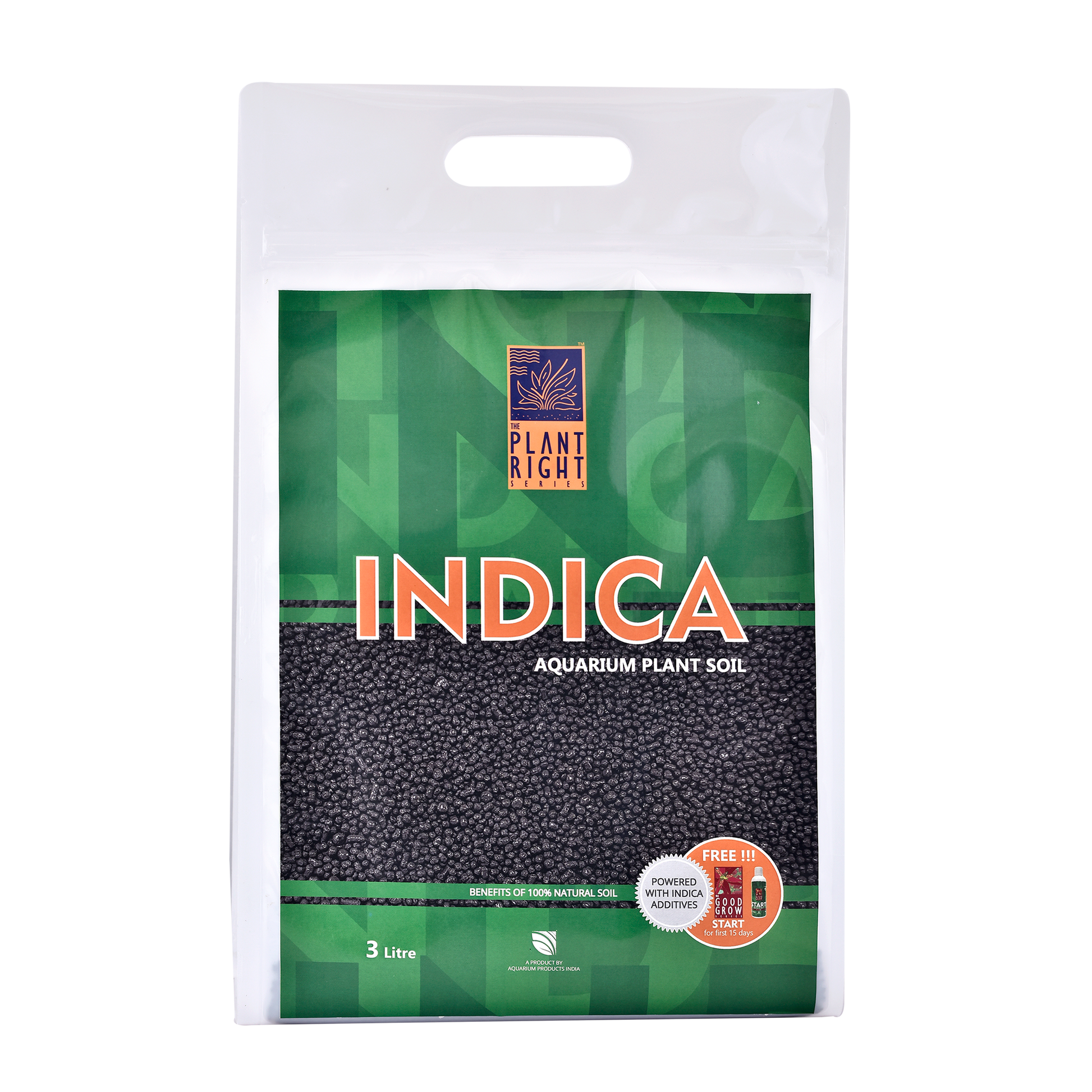
Made from fertile Indian river basin soil by Aquarium Products India, Indica Soil is the first premium aquarium substrate built specifically around the water chemistry found across India. The result? Predictable performance, fewer headaches, and a planted tank that actually thrives from day one.
What makes it different:
- Buffers pH naturally to the ideal 6.5–6.7 range, no chemicals needed
- Releases nutrients gradually over a 2–3 year lifespan
- No rinsing required, fill your tank the same day
- Works for planted aquariums, terrariums, and paludariums
The secret is in the source. Rather than adapting foreign formulas to Indian conditions, Indica Soil starts with materials that already understand your water. Indian river basin soils have been conditioning local water for centuries. This product simply brings that relationship into your aquarium.
Whether you're setting up your first planted tank or your fifteenth, the first few months are always the most critical. Indica Soil takes the guesswork out of that window, giving your plants a stable, nutrient-rich foundation to root into from the very beginning.
Premium substrate. Local roots. Built for India.
Indica Soil is available now at Aquarium Products India.
UNDERSTANDING SUBSTRATE LAYERS
A well-designed planted tank substrate isn't just a single layer of soil—it's a system with different layers serving different purposes.

Base Layer (Optional): For demanding setups or very deep substrate, a base layer of special substrate or power sand provides additional long-term nutrients and improves water circulation through the substrate. This layer is typically 1-2cm deep and covered completely by soil.
Main Soil Layer: This is your primary aquarium soil, the workhorse of the system. Aim for 5-7cm depth in most areas. For aquascaping with hills or slopes, you might go deeper at the back (7-10cm) and shallower at the front (3-5cm) to create visual depth and perspective.
Calculating How Much You Need: Here's a simple formula: multiply your tank's length (in cm) by width (in cm) by desired depth (in cm), then divide by 1000. This gives you the volume in litres. For example, a 60cm × 30cm tank with 6cm substrate depth needs 60 × 30 × 6 ÷ 1000 = 10.8 litres of soil. Round up to ensure complete coverage.
The Setup Process
Step 1: If using a base layer, spread it evenly across the tank bottom first. Don't worry about perfect evenness; slight variation is natural.
Step 2: Pour your aquarium soil directly from the bag. With quality products like Indica Soil, there's no need to rinse first. In fact, rinsing removes beneficial nutrients and fine particles that help plants establish quickly.
Step 3: Shape your substrate according to your aquascape plan. Higher in the back, lower in the front is the classic approach, but follow your creative vision.
Step 4: Before adding water, plant any foreground or carpeting plants. Working with dry or slightly moist substrate is much easier than trying to plant into a filled tank. Use tweezers to plant small portions, ensuring roots are buried, but leaves remain above the substrate surface.
Step 5: Fill the tank slowly. The gentlest method is to place a plate or plastic bag on the substrate and pour water onto it, letting it overflow gently. This prevents disturbing your carefully arranged soil and planted areas.

Common Mistakes to Avoid
Learning from others' mistakes saves time, money, and frustration. Here are the pitfalls to watch out for.
- Disturbing the Substrate Too Much
- Adding Fish Too Soon
- Wrong Plant Placement
- Mixing Incompatible Substrates
Conclusion
A planted aquarium is only as healthy as its foundation. While lighting, filtration, and fertilisation all matter, none of them can compensate for inadequate substrate. Quality aquarium soil provides the nutrients, stability, and biological support that transform a tank from a frustrating struggle into a thriving ecosystem.
Indica Soil represents a genuine advancement for Indian hobbyists, a premium substrate made locally, designed for our water conditions, and priced accessibly for beginners and experienced aquarists alike. Combined with proper setup techniques and a little patience during cycling, it gives your plants and fish the best possible start.
Your journey toward a beautiful, balanced planted aquarium begins beneath the surface. Make that foundation count.

