

The One Thing That Makes Every Aquascape Look Professional
You've probably seen it in photos and competition tanks that dense, impossibly lush green wall of living moss covering the entire back panel of an aquarium, creating a sense of depth and natural beauty that no artificial background can come close to matching. A moss wall.
It looks like it took months of careful cultivation by an expert. And while it does take a few weeks to fully develop, the actual process of building one is surprisingly accessible even for a complete beginner. The materials are inexpensive, the tools are minimal, and the technique, once understood, is logical and repeatable.
This guide is written for two kinds of readers. First, the hobbyist who wants to build a moss wall for their own tank beautifully, correctly, and without the trial-and-error that most beginners go through. Second, the creative individual who sees the growing demand for aquascaping setups in India and wants to know whether moss walls could become a sellable product. Both journeys are covered here, from the first cut of moss to the final growth timeline.
Let's start from the beginning.
What Is a Moss Wall, and Why Does It Work So Well?
A moss wall is exactly what it sounds like a panel covered in living aquatic moss that's placed inside an aquarium, typically as a background. Unlike artificial backgrounds, a moss wall is alive. It grows, fills in, and deepens over weeks. It provides biological benefits moss absorbs excess nutrients from the water, helping to manage nitrates and phosphates naturally. It creates shelter and grazing surfaces for shrimp, small fish, and fry. And visually, it creates a sense of depth and natural scenery that makes even a simple aquarium look like a thought-out, intentional aquascape.
The construction method uses a sponge panel as the substrate a material with a naturally holey, porous surface that moss can grip, root into, and spread across. The sponge holds moisture, provides structure, and keeps the moss in place as it establishes itself. Once the moss colonises the sponge fully, the two become essentially inseparable a single, living green panel.
Step 1: Choosing and Preparing Your Moss
Which Moss Species Should You Use?
Here's something that surprises most beginners: you don't need a specific, rare, or expensive moss species to build a beautiful moss wall. Almost any aquatic moss will work, and mixing multiple species often produces a more interesting, varied texture than using just one.
The most commonly available and effective moss species for Indian hobbyists include Java Moss (the most widely available and arguably the most forgiving), Christmas Moss (known for its distinctive feather-like, layered fronds), Willow Moss (fine, delicate texture that looks stunning when dense), and Pico Moss (a miniature, carpet-forming species excellent for tight, uniform coverage). A mixed combination of two or three species whatever you have available or can source locally works perfectly well. Saved moss trimmings from your existing tanks are completely valid material. Nothing goes to waste.
The single requirement is that the moss is alive and actively growing. Brown, dying, or desiccated moss will not establish on a sponge wall regardless of how carefully you build it.
How to Cut Moss for a Wall
The way you cut your moss matters more than most guides acknowledge. Moss attaches and spreads most effectively when it's in small pieces small enough to sit naturally inside the holes of a sponge without protruding too far, but substantial enough to have viable growing tips.
There are three practical cutting methods, each with its own trade-offs:
Scissors (high-quality moss cutters): The most controlled method. Chop the moss into small pieces, roughly 0.5–1 centimetre. This gives you consistent fragment sizes and keeps the process clean. Dedicated aquascaping scissors, while a worthwhile investment for serious hobbyists, aren't essential any sharp, fine scissors work well.
Knife: A sharp knife on a clean cutting surface works similarly to scissors and is slightly faster for larger volumes. The result is comparable small, irregular fragments that establish well on the sponge.
Blender / Mixer: For hobbyists building multiple units or working with large amounts of moss, a small jar and a hand blender or mixer speeds the process significantly. Place the moss in a small jar with a little water, toggle the blender on and off twice (not a sustained blend just two quick pulses), and you get fine, uniform moss fragments in seconds. One important note: using a household kitchen mixer for this purpose can damage or blunt the blades over time. A dedicated small jar blender or an old mixer set aside specifically for aquascaping use is advisable.
Whatever cutting method you use, the goal is the same: small, consistent fragments with no thick clumps.

Step 2: Preparing the Sponge
The sponge is the foundation of your moss wall. Choose a coarse, open-cell sponge the kind with visible, irregular holes throughout its surface. Fine-cell foam does not work well because the holes are too small for moss to grip and for water to circulate through. The sponge should be cut to fit your tank's back panel dimensions, leaving a small clearance of 1–2 centimetres on all edges to hide the seams with substrate.
Before adding any moss, the sponge needs to be properly moistened. Use a spray bottle to lightly mist the surface until the sponge is uniformly damp. The right level of moisture is critical the sponge should feel slightly wet to the touch, enough for moss fragments to adhere naturally when pressed in, but not saturated or dripping. Excess moisture at this stage leads to moss slipping out of the holes before it establishes, and can promote rot in the early weeks.
A simple way to check: press a dry finger to the sponge surface. If it comes away slightly damp but not wet, the moisture level is right.
Step 3: Filling the Sponge with Moss
This is the most important physical step in the entire build, and the one that most beginners rush causing problems that only become visible weeks later.
Take your cut moss fragments and press small amounts into each hole of the sponge. The layer should be thin just enough to fill the hole and sit flush with the surface, not protruding significantly. This matters for two reasons. First, a thick, compressed moss layer traps stagnant water and organic material in its centre, which rots rather than growing. Second, thin layers establish contact with the sponge surface more effectively, rooting into the material faster and creating a more uniform, dense wall in the long run.
Work across the entire sponge surface systematically, filling from all four directions top to bottom, bottom to top, and from both sides. This approach ensures that every hole gets coverage and that the moss density is even across the panel. Gaps left unfilled will remain bare for weeks while neighbouring moss slowly spreads across them.
If you want extra adhesion during the establishment phase, a small drop of aquarium-safe gel glue applied to individual holes before pressing in the moss can help. This isn't essential moss will establish naturally with moisture alone but it provides reassurance for large panels or for units being built for sale.

Step 4: Building the Supporting Structure
A moss wall panel on its own is lightweight and will shift, float, or lean in a running aquarium. The supporting structure solves this by anchoring the sponge to a stable, weighted base keeping the panel flush against the tank's back glass and maintaining its position even with water flow and current.
Weighting with Glass and Silicone: Place a piece of glass cut to the same dimensions as your sponge panel underneath it. Apply a thin, even layer of aquarium-safe silicone across the top surface of the glass, then press the sponge firmly onto it. Allow the silicone to cure completely before any contact with water this typically takes 2 to 4 days at room temperature. Rushing this step is one of the most common mistakes: uncured silicone leaches acetic acid into the water, which is harmful to moss, bacteria, and fish. Wait the full cure time.
Once cured, the silicone bonds the sponge to the glass firmly, creating a single composite unit that sinks naturally and stays in place.
Sealing with Cling Wrap: Cover the moss-filled top surface of the sponge with clear cling film (plastic wrap). The cling wrap creates a semi-sealed microenvironment that traps humidity around the moss, dramatically accelerating early establishment. Using a toothpick or pin, punch small air holes across the surface these allow gas exchange and prevent the environment from becoming completely anaerobic, which would encourage rot rather than growth. Cling film adheres to a damp sponge surface without any additional fastening.
Step 5: Managing Water Levels and Moisture
Once the structure is assembled and the silicone fully cured, you can introduce it to its tank environment. The water management during the establishment phase is specific and important.
Keep the water level just below the bottom of the sponge not submerging it, but close enough that capillary action keeps the sponge continuously moist from below. The excess water exits via the tank's pump or overflow system, maintaining a stable level. After the initial establishment phase (roughly the first week), you can raise the water level to approximately 5 centimetres (about 2 inches) at the bottom of the tank enough to activate the pump and begin the water circulation that will feed the moss.
From above, mist the cling film surface lightly every day or two. This maintains surface moisture and ensures the moss on the upper portions of the panel doesn't dry out. Avoid spraying directly onto freshly applied silicone joints water contact before full cure weakens the bond.
Step 6: Setting Up the Environment for Fast Growth
Moss growth rate is heavily influenced by environmental conditions, and understanding these variables lets you optimise your setup whether you're growing for your own tank or trying to produce sellable units on a timeline.
Temperature: This is the single biggest variable most Indian builders overlook. Moss grows noticeably faster in cooler conditions. A moss wall kept in an air-conditioned room (20–24°C) will develop visible green coloration in 10 days and dense, uniform coverage in 15–20 days. The same wall in a warm room (28–32°C, common in Indian summers) may take significantly longer. If you're building moss walls for sale, a cool workspace isn't just comfort it's a production efficiency tool.
Lighting: Indirect lighting is completely sufficient for moss wall establishment. Normal household LED lighting, positioned above the tank without direct contact with the cling film surface, provides the light intensity moss needs for photosynthesis and growth. Direct sunlight should be avoided it dries the surface rapidly, creates hot spots that damage the moss, and promotes unwanted algae growth that can compete with the moss before it establishes.
Air Circulation: The punched holes in the cling film serve a dual purpose they allow CO₂ to escape and fresh air to enter, keeping the microenvironment from becoming stagnant. If you notice condensation building up heavily under the cling film, add a few more air holes.

Step 7: Running the System : Bacteria and Fertilizer
Once the structure is in its tank, the water level is set, and the pump is running, two additions make a significant difference to both the speed and health of moss establishment.
Beneficial Bacteria: Adding a quality liquid bacteria supplement to your tank water at this stage is one of the most impactful things you can do. The bacteria colonise the sponge substrate and glass base rapidly, establishing a healthy nitrogen cycle in the new environment before the moss root system fully develops. The standard dosing rate is 1 ml per 10 litres of water so a 30-litre tank setup would receive 3 ml. Add this after your initial water fill, and repeat after every water change.
Green Fertilizer: A liquid plant fertilizer formulated for aquatic plants gives the moss the macro and micronutrients it needs to develop quickly and maintain vibrant colour. The typical dosing rate is 2 ml per 30 litres of water. Use a fertilizer designed specifically for low-tech aquatic plant setups one that provides a balanced nutrient profile without excess phosphates or nitrates that would encourage algae growth at this early, vulnerable stage.
💡 Product Recommendation 1: Sunken Garden Good Bacteria
For the bacteria addition, Sunken Garden Good Bacteria from Aquarium Products India is one of the most effective and trusted options available in the Indian market. It's a premium liquid denitrifying bacteria supplement that rapidly colonises filter media, substrate, and sponge surfaces, converting toxic ammonia through the full nitrogen cycle ammonia → nitrite → nitrate → nitrogen gas. It's completely safe for shrimp, snails, and sensitive aquatic plants, making it ideal for the delicate environment of a newly set up moss wall. Add 1 ml per 10 litres after every water change for best results.
👉 Add Sunken Garden Good Bacteria to your moss wall setup , rated highly by Indian aquascapers.

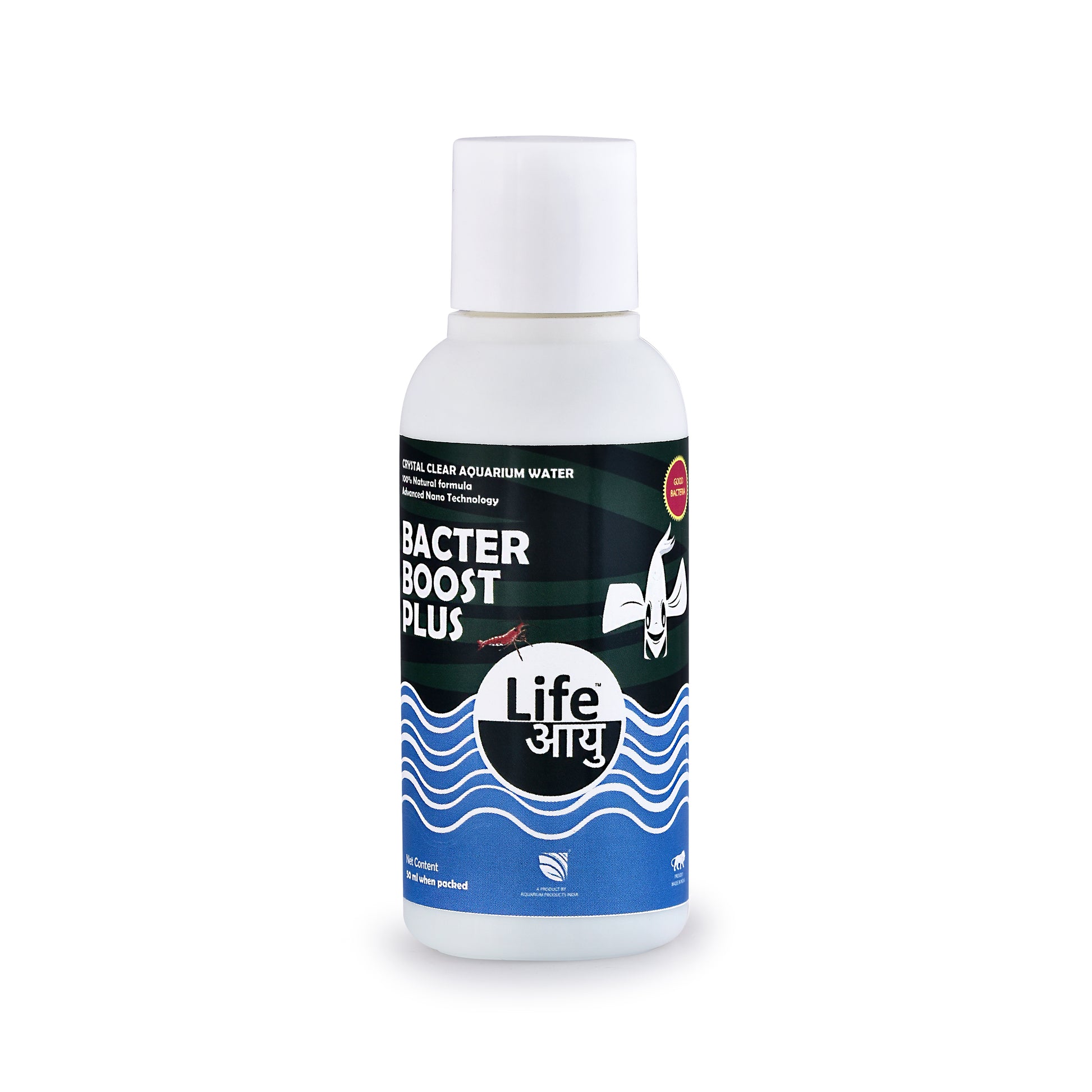
💡 Product Recommendation 2: Life Aayu Bacter Boost Plus
If you're setting up a new tank from scratch alongside your moss wall or if you want a natural, Ayurvedic-inspired bacteria booster to complement your setup Life Aayu Bacter Boost Plus is an excellent choice. Powered by a proprietary blend of live nitrifying bacteria strains enriched with Ayurvedic water conditioners, it kickstarts the nitrogen cycle naturally, reduces ammonia spikes, and creates a balanced, stress-free ecosystem. It's 100% shrimp-safe and plant-friendly, with no harsh chemicals or additives. Available in 50ml, 100ml, and 200ml sizes.
👉 Explore Life Aayu Bacter Boost Plus — India's own Ayurvedic bacteria starter for clear, balanced water.
💡 Product Recommendation 3: Sunken Garden Liquid CO₂ Boost & Fertilizer Range
For the fertilizer component, Aquarium Products India's own Sunken Garden plant care range offers everything a moss wall needs. The Sunken Garden Liquid CO₂ Boost provides an organic carbon source that promotes faster, healthier aquatic plant growth without the complexity and cost of pressurised CO₂ systems ideal for the low-tech moss wall environment. Pair it with a balanced all-in-one liquid fertilizer from the same range for complete macro and micronutrient support. Both are shrimp-safe and formulated for Indian aquascaping conditions.

The Growth Timeline: What to Expect Week by Week
Managing expectations is an important part of building moss walls both for your own satisfaction and, if you're selling them, for your customers. Here's what the realistic growth timeline looks like under good conditions (cool room, indirect light, proper moisture, bacteria and fertilizer added):
Days 1–5: The moss fragments settle into the sponge holes. Little visible change on the surface — this is the establishment phase, where the moss is recovering from being cut and beginning to anchor its rhizoids (root-like structures) into the sponge material. Keep moisture levels consistent and resist the urge to disturb the panel.
Days 7–10: The first signs of new growth appear as tiny green tips emerging from the sponge holes. Under cool conditions, you may see initial green coloration beginning to spread across the surface. This is confirmation that the moss has successfully established and is actively growing.
Days 10–15: Visible green coloration across most of the panel. The moss is clearly alive and growing, though the coverage is still uneven in patches. This is the inflection point — growth accelerates noticeably from here.
Days 15–20: In ideal conditions, the moss wall approaches dense, uniform coverage. The sponge surface becomes largely hidden under a continuous green layer. The wall now looks genuinely impressive and is suitable for being moved to a display tank or handed to a customer.
In warmer conditions common during Indian summers each phase takes longer. A wall that reaches full coverage in 15 days in an air-conditioned room might take 25–30 days in a warm environment. Plan your production schedule accordingly.

The Complete Step-by-Step Checklist
For quick reference whether you're building your first wall or your fiftieth here's the complete process in one place:
| Step | Action | Key Detail |
|---|---|---|
| 1 | Cut moss into small pieces | Scissors, knife, or blender — thin fragments only |
| 2 | Moisten sponge with spray bottle | Damp, not saturated |
| 3 | Fill each sponge hole with moss | Thin layer, insert from all four directions |
| 4 | Place glass base + apply silicone | Cure fully — 2 to 4 days before adding water |
| 5 | Cover with cling wrap | Punch air holes for gas exchange |
| 6 | Set water level | Approximately 5 cm at the bottom once established |
| 7 | Run air-lift / filtration system | Start after water has settled |
| 8 | Add beneficial bacteria | 1 ml per 10 litres of water |
| 9 | Add liquid fertilizer | 2 ml per 30 litres of water |
| 10 | Monitor and mist daily | Growth visible at Day 10–15; full wall at Day 15–20 |
What increases the value of a moss wall beyond the basics?
A fully established wall (sold after Day 20 with dense, uniform growth) commands significantly more than a freshly assembled one. Mixed moss species with varied textures look more natural and interesting than a single-species wall. Panels built with premium moss varieties like Christmas Moss or Willow Moss are perceived as higher quality. And as always, presentation and branding a clean photo, a care card, your Instagram handle add perceived value that translates directly to price.
Common Mistakes and How to Avoid Them
Putting too much moss in each hole. This is the most common error. Thick moss layers trap organic material, create anaerobic pockets, and rot from the inside out while looking fine from the surface. Thin is always better at the assembly stage the moss will fill in naturally as it grows.
Adding water before the silicone is fully cured. Two to four days is the minimum. If you can smell the vinegar-like odour of curing silicone, it's not ready. Water contact with uncured silicone leaches harmful compounds that damage moss and bacteria alike.
Using direct sunlight as a light source. It seems logical sunlight is what plants grow towards, after all. But in a semi-sealed moss wall environment, direct sunlight creates rapid surface drying, uneven temperature, and aggressive algae growth. Indirect or artificial LED light is always the correct choice for this application.
Skipping the bacteria and fertilizer steps. A moss wall without a functioning nitrogen cycle is a moss wall that's slowly poisoning itself with its own metabolic waste. The bacteria and fertilizer additions aren't optional extras they're the biological infrastructure that makes the whole system work.
Conclusion: A Living Wall Worth Building
There's something genuinely satisfying about a moss wall both the process of building it and the result of watching it grow. It's one of those rare things in the aquascaping hobby that looks far more complex and expensive than it actually is, which makes it an ideal skill to develop whether you're building for the love of it or building to sell.
The technique is learnable in a single session. The materials are affordable and largely sourced locally. The growth timeline is short enough to be motivating. And the results when done correctly are consistently beautiful.
Give your moss wall the biological support it deserves with quality bacteria and fertilizer products, maintain the right environment, and in three weeks you'll have something that genuinely stops people in their tracks.

