
It starts subtly. The edges of your fish's fins look a little uneven, maybe slightly frayed, like old fabric beginning to fray. You notice it but figure it's probably nothing. A week later, the fins look shorter. The edges are no longer smooth; they're ragged, discoloured, sometimes streaked with red or white. By the time you realise something is seriously wrong, a significant portion of your fish's beautiful fins has simply... disappeared.
That's Fin Rot, and it's one of the most common, most misunderstood, and most preventable diseases in the aquarium hobby.
The reason Fin Rot is so often missed early is that it progresses gradually. Unlike Ich, which announces itself with visible white spots, Fin Rot creeps in quietly. But don't let its slow start fool you; left untreated, it can destroy fins completely, spread to the fish's body, and ultimately be fatal.
The excellent news? With early detection and the right response, most fish recover completely, and in many cases, even regrow significant portions of damaged fin tissue.
What Is Fin Rot?
Fin Rot is a bacterial (or sometimes fungal) infection that affects the fin tissue of aquarium fish. The infection typically begins at the edges of the fins, the tips and margins and slowly works its way inward toward the body. In bacterial Fin Rot (caused most commonly by bacteria like Pseudomonas fluorescens, Aeromonas, or Flavobacterium columnare), the fin edges appear ragged, uneven, and may show reddish, bloody streaks where blood vessels are affected.
In fungal Fin Rot, the edges tend to look more evenly eroded with a whitish or greyish border almost like the fin is being dissolved rather than torn.
In many real-world cases, both bacterial and fungal infections occur together, particularly when the tank environment is poor and the fish's immune defences are depleted.
The critical thing to understand about Fin Rot is this: the bacteria and fungi that cause it are almost always already present in your aquarium. They exist naturally in most tanks at low, manageable levels. What allows them to suddenly attack fin tissue is not some new pathogen entering the tank it's a breakdown in your fish's natural defences, almost always caused by stress, poor water quality, or physical injury.
Fin Rot is, in most cases, a symptom of a problem in the tank environment as much as it is a disease in itself.

Why Does Fin Rot Happen? (Root Causes)
Understanding why Fin Rot develops is the key to both treating it and, more importantly, preventing it from recurring.
Poor Water Quality
This is the overwhelming number one cause. When ammonia or nitrite levels rise in a tank due to overfeeding, overstocking, insufficient filtration, or infrequent water changes, fish are under constant chemical stress. This chronic stress suppresses their immune system, damages their slime coat (the thin protective mucus layer that covers a fish's body), and creates an environment where bacteria thrive.
The connection to the Nitrogen Cycle is direct: in a healthy, well-cycled tank, beneficial bacteria continuously convert toxic ammonia into nitrite and then into the relatively harmless nitrate, which is diluted through regular water changes. When this cycle breaks down, as it does in uncycled tanks, tanks after medication has killed beneficial bacteria, or tanks with inadequate filtration, the resulting ammonia and nitrite spike creates the perfect storm for Fin Rot.
Many Indian fish keepers, particularly in warmer cities where water evaporates quickly, underestimate how often they need to top up or change water. In warm climates, biological processes in the tank run faster, meaning waste accumulates faster, and water quality degrades faster than in cooler environments.
Physical Injury
A fish with a torn or damaged fin has an open wound, and that wound is a direct entry point for bacteria. Physical fin injuries happen more commonly than you'd think: fin nipping by aggressive tank mates, a fish getting a fin caught in a filter intake, scraping against sharp decorations, or rough handling during netting and transport. Even a minor injury, in a tank with suboptimal water quality, can rapidly develop into full Fin Rot.
This is why fin-nipping species like tiger barbs, serpae tetras, and some cichlids can cause Fin Rot problems in community tanks. The repeated damage they inflict on other fish's fins creates a continuous supply of entry points for bacterial infection.
Stress from Overcrowding or Bullying
Overcrowded tanks are Fin Rot factories. When fish are kept in too small a space, with too many tank mates, several problems converge simultaneously: water quality degrades faster, fish are physically stressed from constant close proximity, aggression and fin nipping increase, and the overall immune function of every fish in the tank suffers. A fish that is constantly bullied, chased, or unable to rest is a fish with a significantly weakened immune system.
Poor or Inadequate Nutrition
A fish eating a low-quality diet is a fish with compromised immune defences. Many budget fish foods lack sufficient vitamins, minerals, and quality protein nutrients that are essential for immune function, tissue repair, and the maintenance of the protective slime coat. A nutritionally deficient fish is far more vulnerable to opportunistic infections like Fin Rot, and far slower to recover when infection occurs.
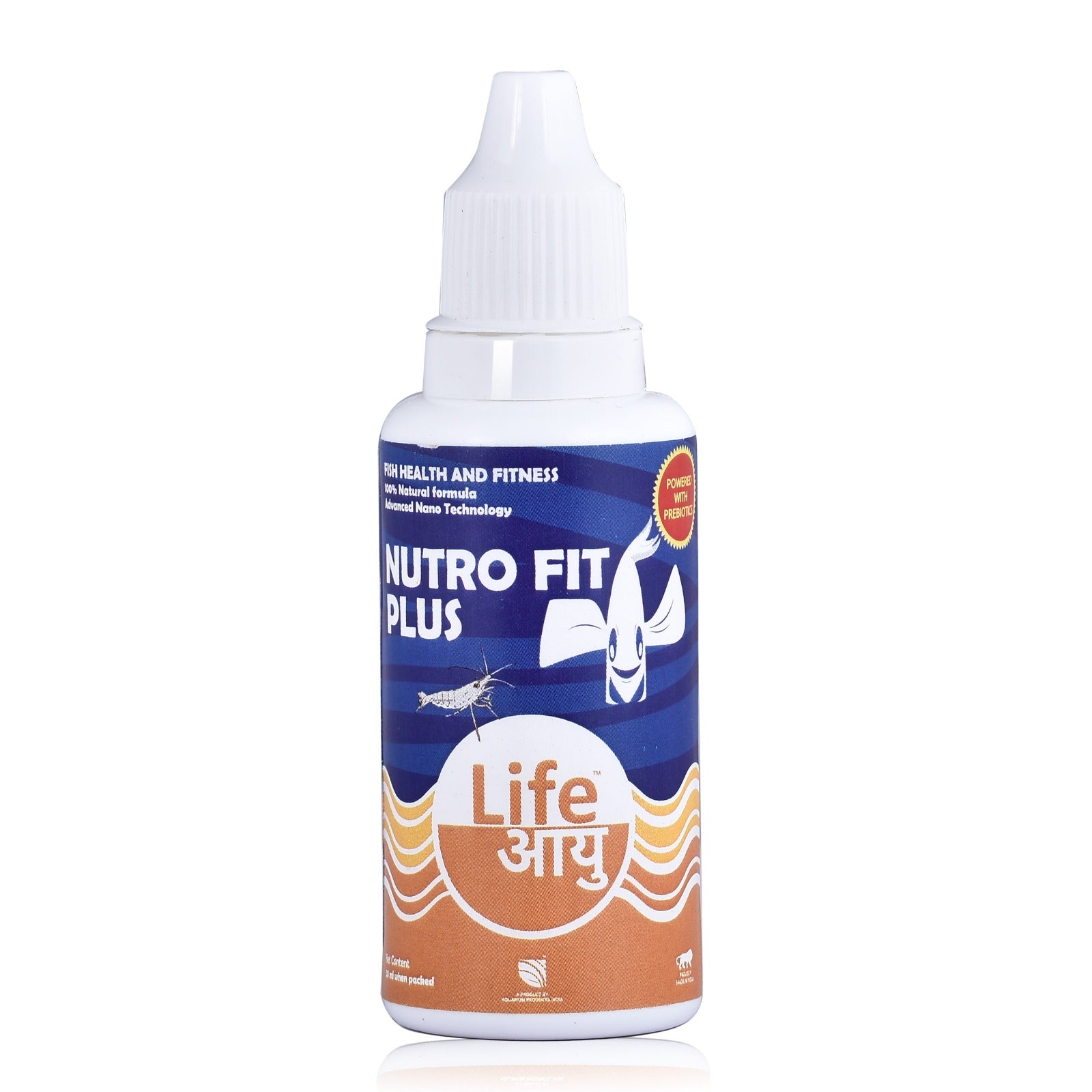
Nutrition is where so many aquarists lose the battle against recurring Fin Rot. Nutro Fit Plus addresses this directly, providing comprehensive nutritional support that strengthens immunity, improves digestion, and helps maintain the kind of robust physical condition that keeps Fin Rot at bay. Think of it as daily armour for your fish. Try Nutro Fit Plus today and see the difference proper nutrition makes.
Recognising Fin Rot: Early and Advanced Signs
Being able to spot Fin Rot early dramatically improves your fish's prognosis. Here's a complete picture of what to look for.
In the early stages, you'll notice the fin edges looking slightly uneven or frayed, like the smooth margin of the fin has developed small nicks or tears. There may be a slight discolouration at the fin tips: a whitish or brownish border, or faint reddish streaking. The fish may still be eating and behaving normally at this point, which is why this stage is so often missed.
As the infection progresses into the intermediate stage, the fin tissue begins visibly erode. The fin looks noticeably shorter than it should. Ragged, irregular edges become more pronounced. Reddish or black streaking caused by bacterial invasion of blood vessels in the fin tissue becomes more visible. The fish may start to show behavioural changes: less active, clamped fins, and reduced appetite.
In advanced Fin Rot, large sections of fin tissue are gone. The infection is now approaching the base of the fin, the point where fin tissue meets the fish's body. At this stage, if the infection crosses into the body, it can become systemic (body rot), which is far more serious and much harder to treat. The fish is typically lethargic, hiding, and not eating.

How to Treat Fin Rot: Step-by-Step
Step 1: Isolate the Affected Fish
If possible, move the fish with Fin Rot to a clean hospital tank. This reduces the stress of competition and aggression from tank mates, allows you to dose medication precisely without affecting your main tank's biological filter, and makes monitoring the fish's progress much easier.
If you don't have a hospital tank, treat the main tank — but be aware that some medications can affect your beneficial bacteria colony, so monitor ammonia closely during treatment.
Step 2: Perform an Immediate Water Change
Do a 30–40% water change immediately, using properly conditioned, temperature-matched water. Clean the substrate thoroughly with a gravel siphon. This single step alone can have a dramatic positive effect on early-stage Fin Rot, because it removes the bacterial load in the water and reduces the chemical stressors suppressing your fish's immune system.
Step 3: Add Aquarium Salt
Non-iodised aquarium salt at 1–2 teaspoons per 10 litres provides several benefits: it helps kill some surface bacteria, draws out excess fluid from stressed tissue, reduces the effort fish need to regulate their internal salt balance (osmoregulation), and generally helps with stress recovery. Dissolve the salt in a small amount of tank water before adding it to the tank. Avoid with scaleless fish, sensitive species, and live plants.
Step 4: Use an Antibacterial Treatment
For bacterial Fin Rot, an antibacterial aquarium medication containing ingredients like kanamycin, erythromycin, or tetracycline is effective. For fungal Fin Rot, antifungal treatments are needed. For mixed infections (which are common), broad-spectrum treatments work best. Always follow dosing instructions exactly, remove activated carbon from your filter during treatment (it absorbs medication), and complete the full treatment course.
Step 5: Address the Root Cause
This is the step that most people skip, and why Fin Rot keeps coming back. Medication treats the infection; it does not fix the problem that caused it. While your fish is recovering, identify and correct whatever led to the Fin Rot in the first place. Is your tank overstocked? Are your water change intervals too long? Is there a fin-nipping bully in the tank that needs to be rehomed? Are you feeding a poor-quality food?

Without addressing the root cause, Fin Rot will return. Fish immunity booster India: Nutro Fit Plus is a powerful ally during recovery. Shop Nutro Fit Plus now and give your fish the recovery advantage they need.
Step 6: Support Fin Regrowth
Here's something encouraging that many fish keepers don't know: fish can actually regrow fin tissue, provided the infection is caught before it reaches the fin base. During the regrowth phase, you may first notice a clear, thin membrane growing back from the healthy fin tissue. This is normal and a great sign. Over several weeks, pigmentation returns and the fin gradually rebuilds. Optimal water conditions and excellent nutrition dramatically accelerate this process.
Fin Rot in Betta Fish: A Special Note
Betta fish deserve special mention here because they are by far the most commonly affected species seen in Indian households, and also one of the most commonly mismanaged.
Bettas are frequently sold in tiny containers or small unfiltered bowls, which unfortunately create ideal conditions for Fin Rot: minimal water volume, rapid waste accumulation, no biological filtration, and temperature instability. A betta in a bowl needs water changes every 1–2 days to maintain acceptable water quality, a regimen that very few owners maintain consistently.
Bettas also have strikingly large, ornate fins (in the case of males), which make Fin Rot symptoms highly visible but also mean there's more fin tissue at risk, and more surface area for bacterial colonisation.
Bettas with Fin Rot should be moved to a properly filtered, heated 15–20 litre tank with clean, conditioned water. With proper care, betta fins can regrow beautifully, sometimes over a period of 4–8 weeks.
Prevention: The Long Game
Consistent water maintenance. In the Indian climate, weekly water changes of 25–30% are a minimum. In warmer months, or in heavily stocked tanks, twice-weekly partial changes may be more appropriate. Test ammonia and nitrite monthly as a baseline health check.
Choose compatible tank mates. Research fish before buying. Avoid known fin nippers in tanks with long-finned species. A betta should almost never be kept with tiger barbs, serpae tetras, or other species known for aggressive fin nipping.
Remove or smooth sharp decorations. Inspect any new tank decoration for sharp edges before adding it. Many plastic decorations have edges that can catch and tear fins during normal swimming.
Feed a high-quality, varied diet. Rotate between good-quality flakes or pellets, frozen daphnia, and occasionally live food. Variety prevents nutritional deficiencies and keeps fish engaged and healthy.
Conclusion: Fin Rot Is Preventable And Reversible
Fin Rot is not a death sentence. It's a warning signal, a clear sign that something in your tank environment needs attention. The fish keepers who lose fish to Fin Rot are usually those who saw the early signs and waited, hoping it would resolve on its own. It won't.
But the aquarists who respond quickly, improving water quality immediately, addressing the root cause, completing a full treatment course, and investing in long-term nutrition almost always see their fish recover. Many even see beautiful, complete fin regrowth that makes it look like the disease never happened.
Early detection, proper treatment, and consistent prevention that's the complete picture. And Nutro Fit Plus from Aquarium Products India makes the prevention side of that equation simple, consistent, and effective.
👉 Shop Nutro Fit Plus on Aquarium Products India, because healthy fins start with a healthy fish.
Your fish are counting on you to notice the signs. Now you know exactly what to look for and exactly what to do.

